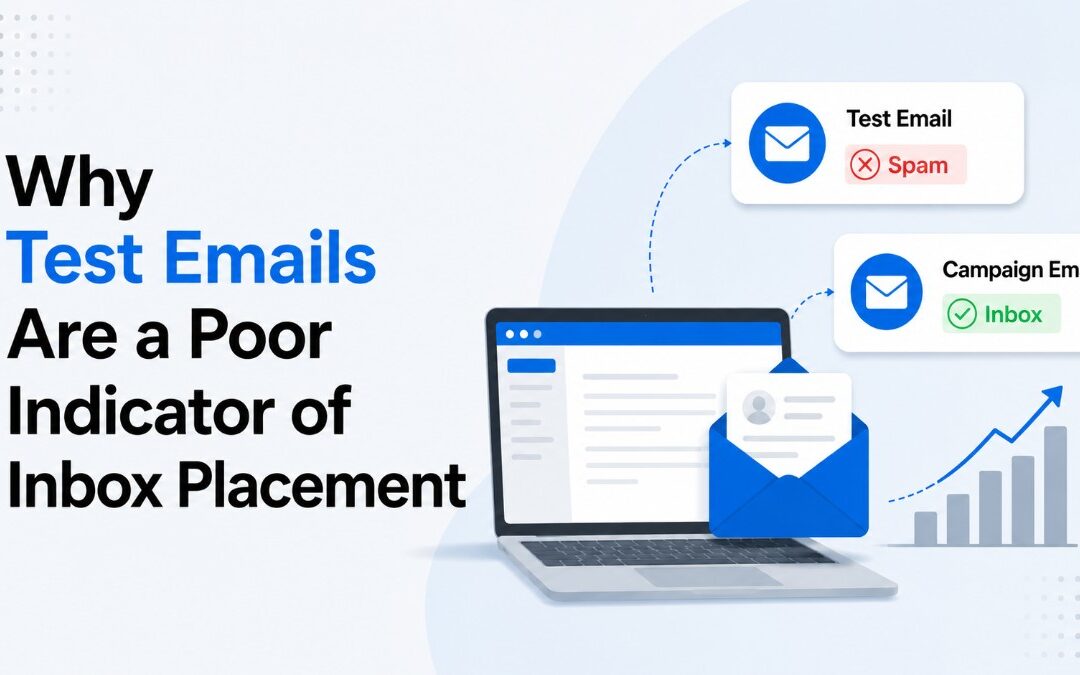
One of the most common mistakes in email marketing is using an ESP’s “Send Test” feature to evaluate inbox placement.
If your test email to your own Gmail or work account lands in Spam, it’s tempting to assume your campaign will too. In reality, a test email is often not the same message your subscribers receive, making it a poor indicator of real-world deliverability.
Depending on your ESP, a test email typically:
- Does NOT have open and click tracking
- Omit campaign-specific metadata (in the headers)
- Lack recipient-specific unsubscribe links (so the link is basically fake)
- Not include a functional one-click unsubscribe mechanism
- Be generated outside the normal campaign sending pipeline
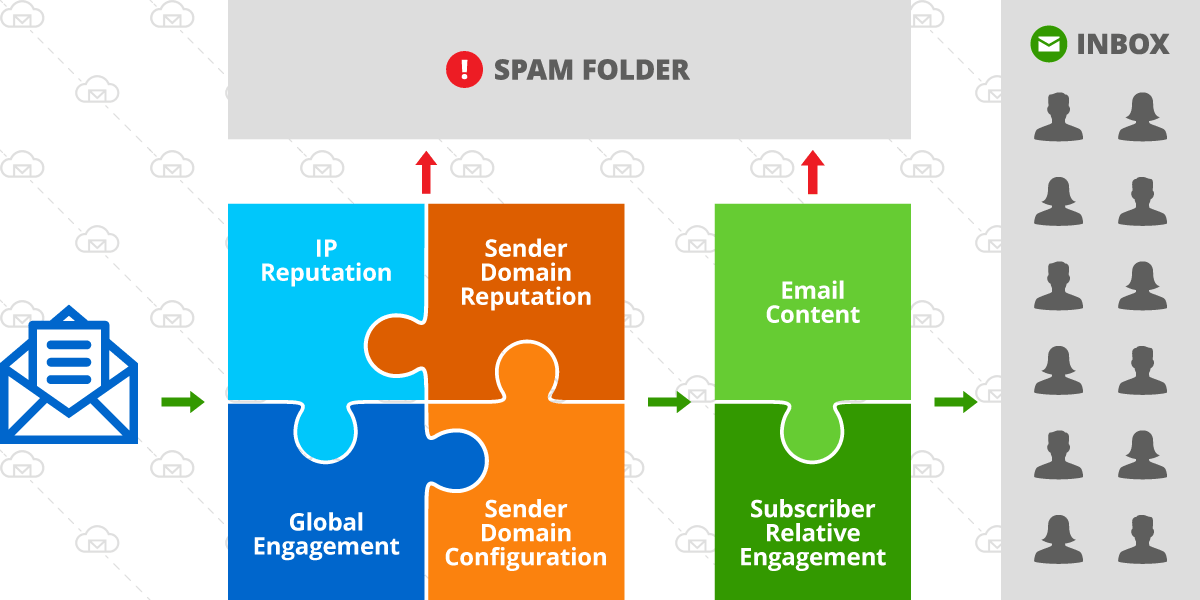
While these differences may seem minor and not noticeable, mailbox providers evaluate much more than the visible content of an email. They consider message headers, links, unsubscribe mechanisms, authentication, and other characteristics that help distinguish legitimate bulk mail from suspicious messages.
Production campaigns include signals that are often missing from test emails, such as proper List-Unsubscribe headers and recipient-specific unsubscribe links. Without these elements, a test email may not accurately represent the message that mailbox providers evaluate during a real campaign.
That’s why it’s not uncommon for a test email to land in Spam while the actual campaign reaches the Inbox just fine.
So what’s the right approach?
Use “Send Test” for what it’s designed to do:
- Verify rendering and formatting
- Review appearance in the inbox (subject line and preview)
- Check personalization
- Validate links and images
If you want to evaluate inbox placement, send a real campaign to your test list instead. This ensures the email is generated through the same production pipeline as your subscriber campaigns, including tracking, campaign metadata, and unsubscribe functionality.
The closer your test resembles a real production email, the more meaningful your inbox placement results will be.
In short, test emails are a (mostly visual) QA tool—not a deliverability testing tool.