
5 ActiveCampaign Alternatives in 2026
By use case: for agencies, e-commerce, growing brands & more

Published on September 13, 2026
ActiveCampaign is a marketing platform that has been a favorite for automations and managing clients by agencies. In addition to raising prices, ActiveCampaign introduced annual commitments on its monthly plans in early 2026, which turned off a lot of customers and prospects.
Annual commitments are less than ideal if you have client churn, or your total contact count fluctuates, or you’re just not ready to commit long-term.
It can also become cumbersome for agencies and multi-location businesses managing multiple accounts. Separate logins, duplicated templates, and limited cross-account controls can add unnecessary work unless you move to a higher-tier setup.
While ActiveCampaign is still a great platform, it might just not be the right fit for your business, depending on how (and at what scale) you use email marketing.
In this guide, I compare 5 ActiveCampaign alternatives for agencies, franchises, e-commerce brands, and growing businesses so you can find the platform that best fits your workflow, budget, and feature needs.
My top picks for ActiveCampaign alternatives:
- BigMailer: Best for Multi-brand Management & Large Teams
- MailerLite: Best for Beginners
- Brevo: Best for Multi-Channel Scaling
- Klaviyo: Best for E-commerce Brands
- Customer.io: Best for Advanced Behavioral Automation
How I chose the solutions on this list: I looked for platforms that solve an obvious gap in ActiveCampaign’s setup. The right ActiveCampaign alternative for you is the one built for how you work and what you need. Each tool selected has a distinct use case , a transparent pricing structure, and a track record of solid customer support
Use the table below for a quick comparison of features and pricing, or jump to the relevant provider using the links above.
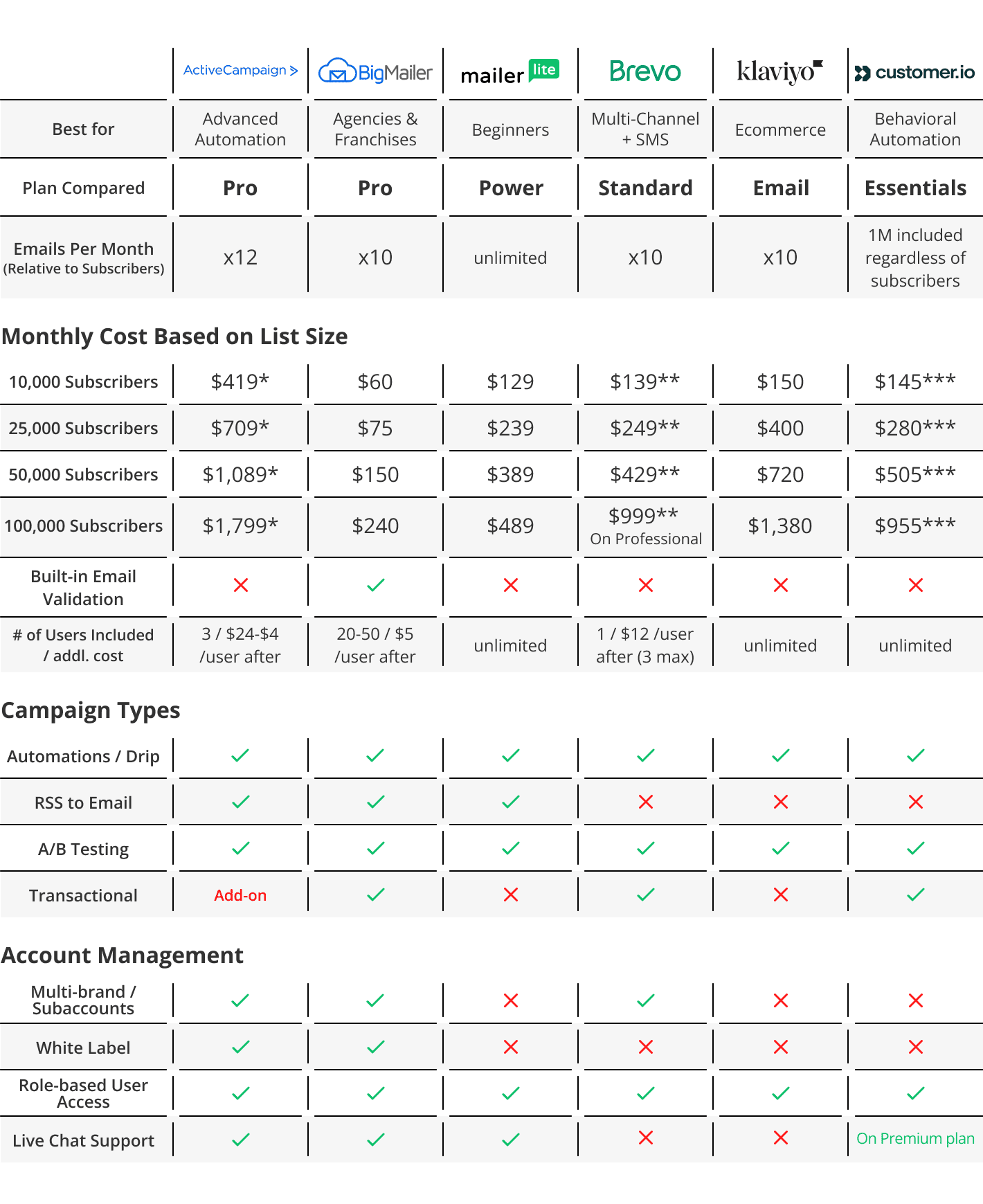
*ActiveCampaign prices shown are annual-billed; ActiveCampaign requires an annual commitment on all monthly plans
**Brevo prices by emails sent — figures assume 10 emails per contact per month; the 100k tier requires Brevo’s Professional plan
***Customer.io Essentials: $100 for the first 5,000 profiles + $0.009 per additional profile
Last updated September 13, 2026
NOTE: None of the platforms recommended in this article allow cold outreach or use of purchased, scraped, or 3rd-party lists.
1. BigMailer: Best for Multi-brand Management and Large Teams
BigMailer is built for businesses managing email across multiple brands, clients, or locations with role-based user access that appeals to large teams. It also offers a variety of features that high volume senders appreciate, like volume throttling, engagement by domain reports and advanced segmentation. BigMailer plans come with generous user limits, starting at 20 on Business plans, and unlimited brands (aka subaccounts) at no additional cost.
If you’re an agency running ActiveCampaign for multiple clients, or a franchise managing email across a dozen locations, you’re familiar with the workaround of separate logins, rebuilding the same template, and manually managing who has access to what. That’s why multi-brand management exists as a category on this list, and BigMailer treats it as the default rather than an upgrade.
With BigMailer, you can manage all client accounts from one dashboard. Shared templates, user role-based permissions, and detailed engagement reporting are included at every paid tier.
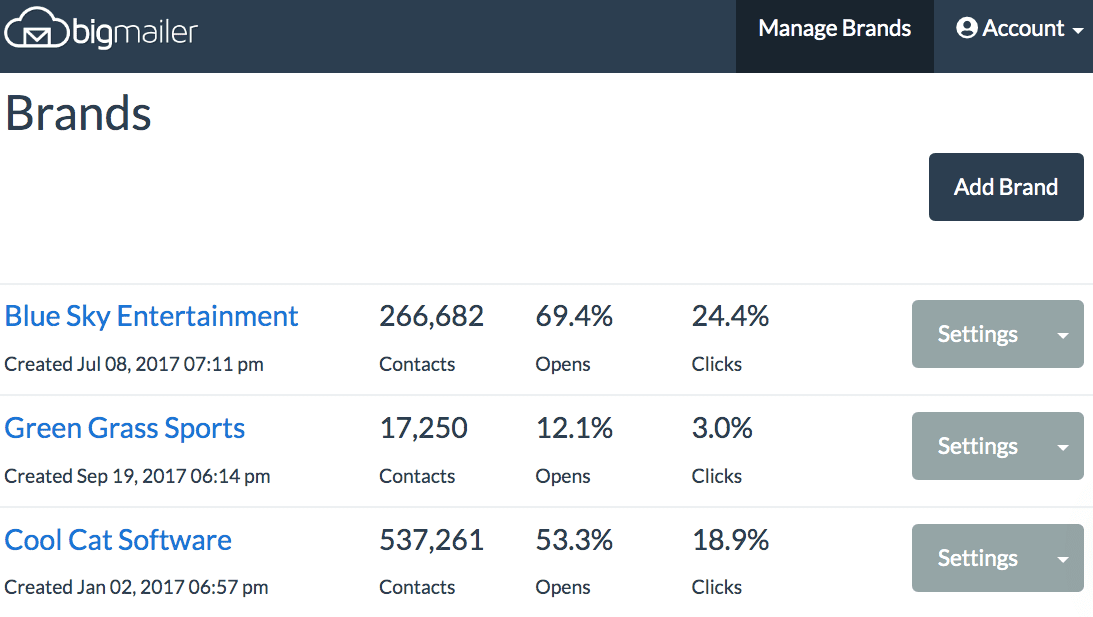
For context, ActiveCampaign, a long-time popular choice for agencies, now has a separate product for multi-brand and location tools. ActiveCampaign HQ comes with a one-time $4,500 setup fee and requires booking a sales call to get monthly pricing.
BigMailer’s multi-brand tools are built into the plans you can see and set up while still on a free plan. That structure pairs with a stellar deliverability track record. BigMailer reports customers averaging a 99.7% delivery rate, largely thanks to built-in email validation scrubbing invalid addresses, typos, and known spam traps on import.
BigMailer isn’t the right fit for every business type. If you’re a single-location small business with a list under 10,000 contacts and no plans to manage multiple brands, a simpler tool like MailerLite will likely serve you better.
Pros
- Multi-brand and sub-account management built into every plan
- Out-of-the-box white-label option
- Built-in email validation with spam trap removal
- Advanced segmentation and campaign engagement reporting (by mailbox provider)
- Volume throttling to protect deliverability for high-volume senders
- Live chat and email support 7 days a week
Cons
- Not built for heavy e-commerce or product-image-driven sends
- Free plan requires connecting your own Amazon SES account (can request trial on paid plan via support chat)
Pricing
- Business Lite – $7.50/month per 5,000 contacts (starts at $30/month), requires your own Amazon SES connection, at an added cost of $0.10 per 1,000 emails sent, paid directly to Amazon
- Business Pro – $15/month per 5,000 contacts (starts at $60/month for up to 20,000 contacts)
- Agency Pro – $12/month per 5,000 contacts for 200,000+ contacts, up to 100 users, includes white label (contacts support for high volume discounts)
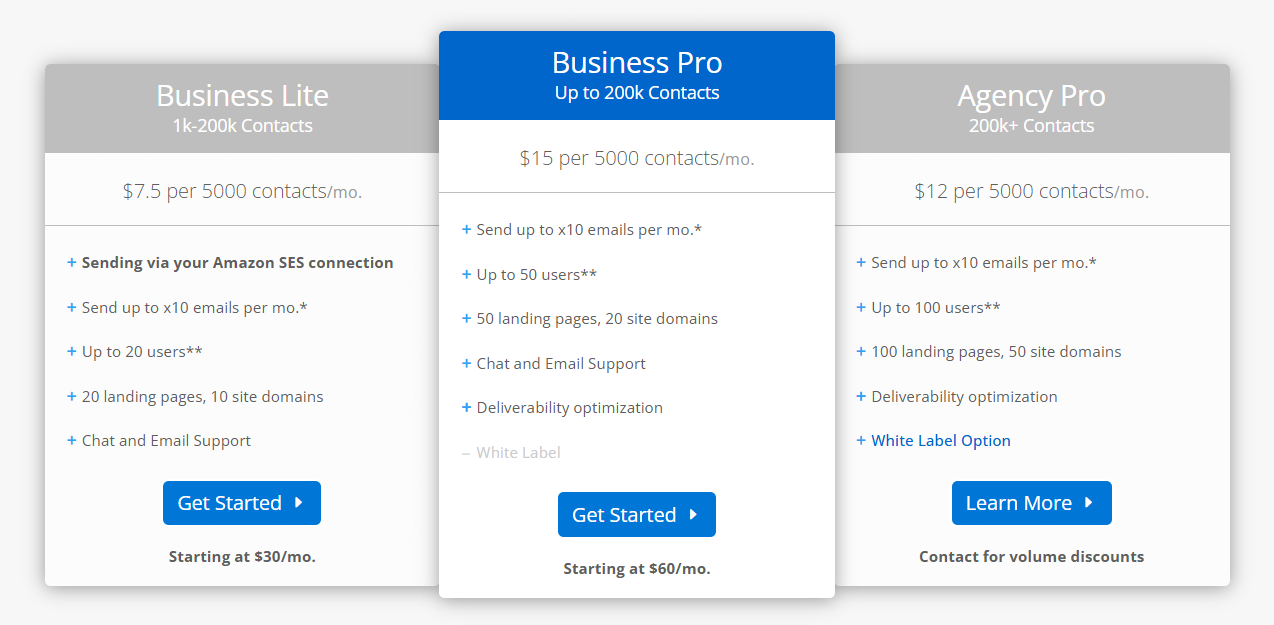
Current as of August 2026 – verify against BigMailer’s pricing page.
Customer reviews
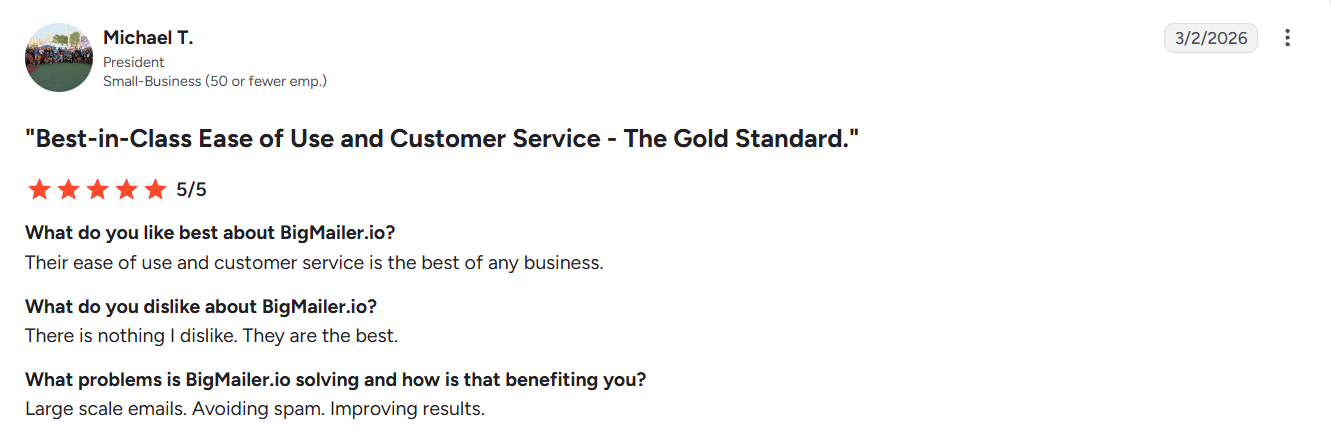
BigMailer holds a 4.9/5 rating on G2. Reviewers consistently praise how easy the platform is to set up and how responsive the support team is, with several specifically calling out cost savings after switching from pricier tools like Mailchimp.
Here’s what Michael has to say:
2. MailerLite: Best for Beginners & Simplified Email Marketing
MailerLite could be the best option if you’re switching because ActiveCampaign feels overly complicated. If you’ve found yourself paying for automation branches, CRM pipelines, and reporting dashboards you never open, MailerLite strips email marketing back down to what most small teams actually use.
That simplicity matters most if you’re a solo creator, blogger, or small business sending newsletters and basic welcome sequences rather than managing multiple brands or building ten-step behavioral workflows. The tradeoff is giving up ActiveCampaign’s automation depth and any multi-brand structure in exchange for a much shorter learning curve and a cleaner interface.
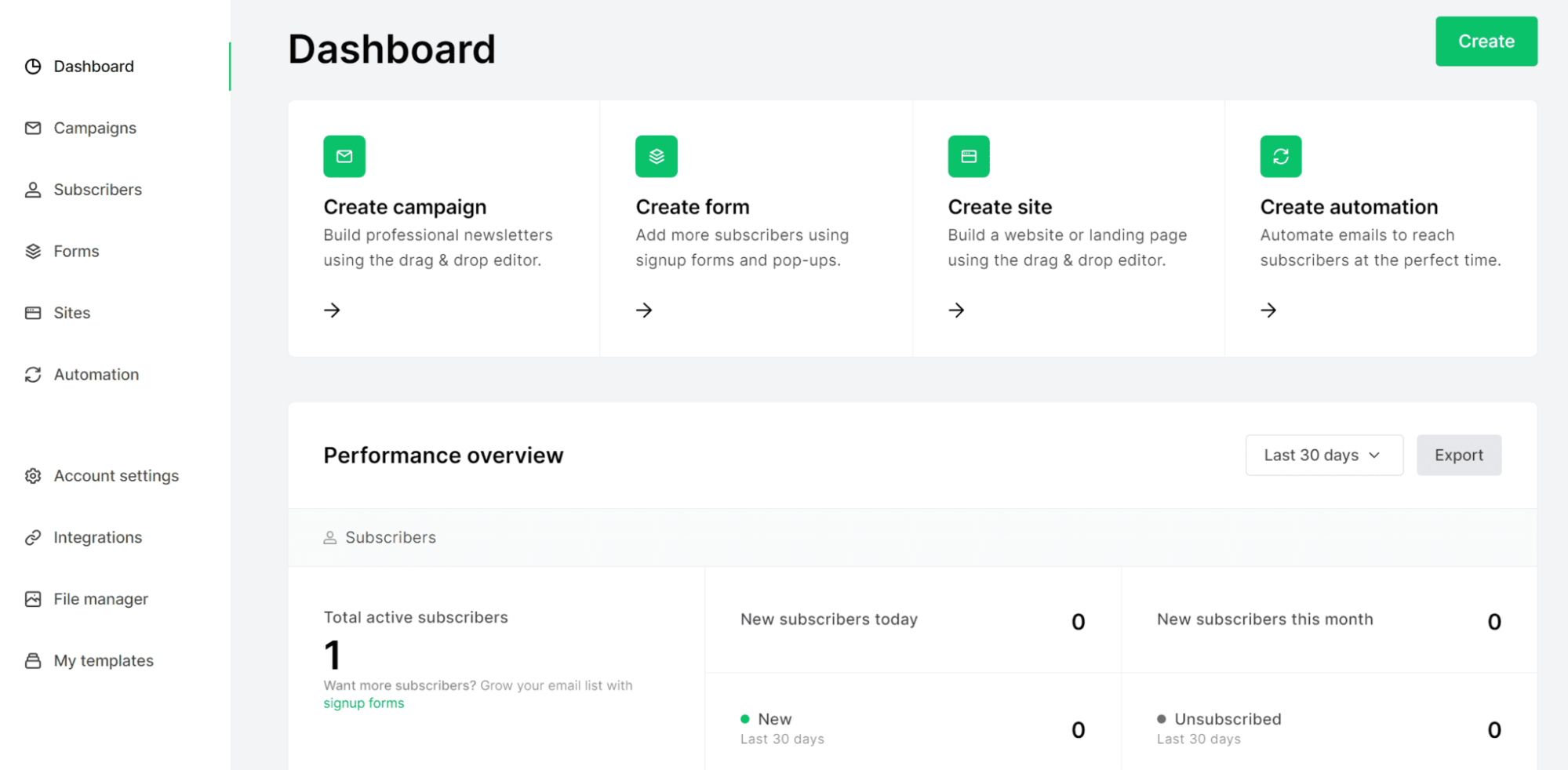
It’s worth noting that MailerLite restructured its plans in June 2026, reducing the free tier from 500 to 250 active subscribers and setting a monthly cap of 2,500 emails. If you were counting on staying free for a while, run the numbers again before you migrate.
Pros
- Genuinely easy to learn
- Website builder bundled in, useful for creators who need a lightweight page without a separate tool
- AI writing assistant included on paid tiers
Cons
- No true multi-brand or sub-account management — each brand needs its own account
- Free plan limits dropped significantly in mid-2026, so it’s less viable as a long-term free option than it used to be
Pricing
MailerLite’s paid plans start at $12/month and scale with subscriber count — roughly $69/month at 5,000 subscribers and $389/month at 50,000 on the Power plan. They offer a discount on annual billing.
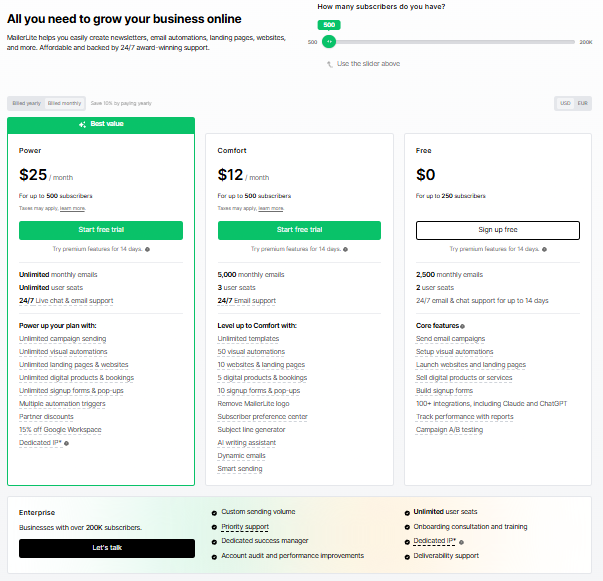
Current as of August 2026, post-June rebrand. Visit the MailerLite pricing page to use the slider to get accurate pricing based on your subscriber number.
Customer reviews
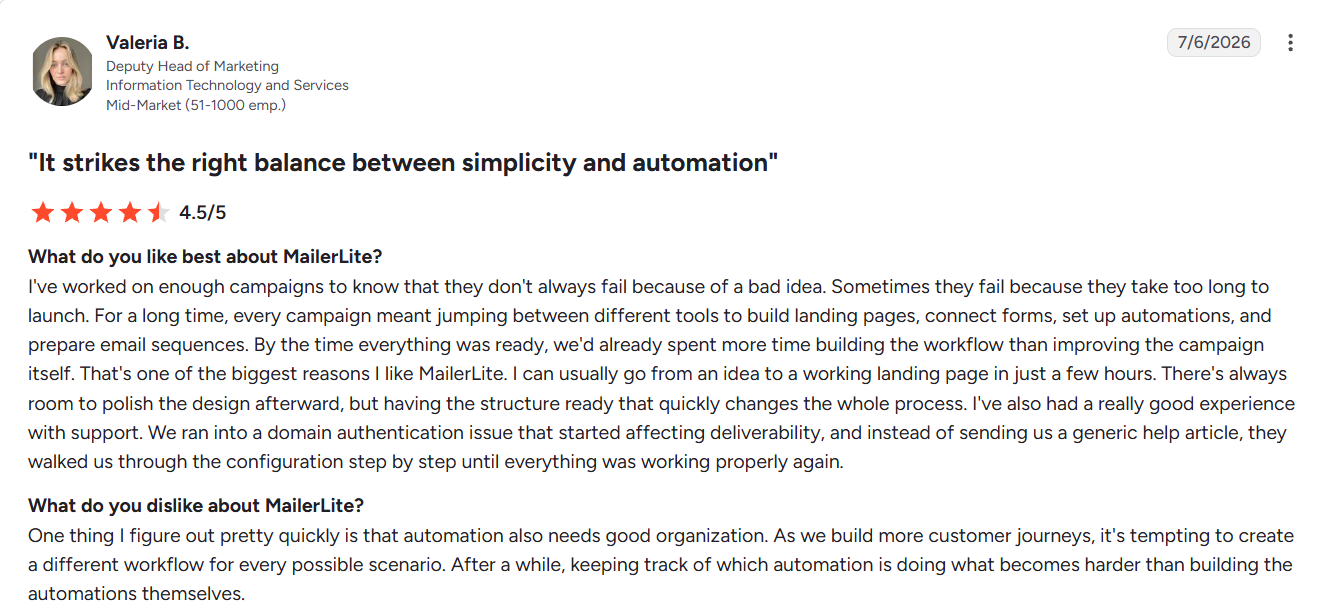
MailerLite rates 4.6/5 on G2. Reviewers highlight how quickly they were able to get set up and how responsive live chat support is, even on lower-cost plans. The main knocks are limited advanced reporting, no built-in CRM, and frustration from some users after the free plan’s limits tightened in mid-2026.
Here’s what Valeria has to say:
3. Brevo: Best for Multi-Channel Scaling
Brevo flips the pricing model most platforms on this list use, including ActiveCampaign’s. Instead of charging per stored contact, it charges by how many emails you send, which makes it a strong ActiveCampaign alternative if you have a large list but don’t email it frequently.
For example, if you’re sitting on 50,000 contacts but only send 2 campaigns a month, contact-based pricing (like ActiveCampaign’s) charges you to store contacts you don’t communicate with often. Brevo doesn’t.
On the flip side, if you send daily or run heavy automation sequences, send-based pricing can cost more than a flat contact-based plan at the same list size.
Trusted Shops used Brevo’s automation to run a two-step re-engagement campaign on unengaged contacts, reactivating 21% of them — over 10,000 contacts in that campaign alone.
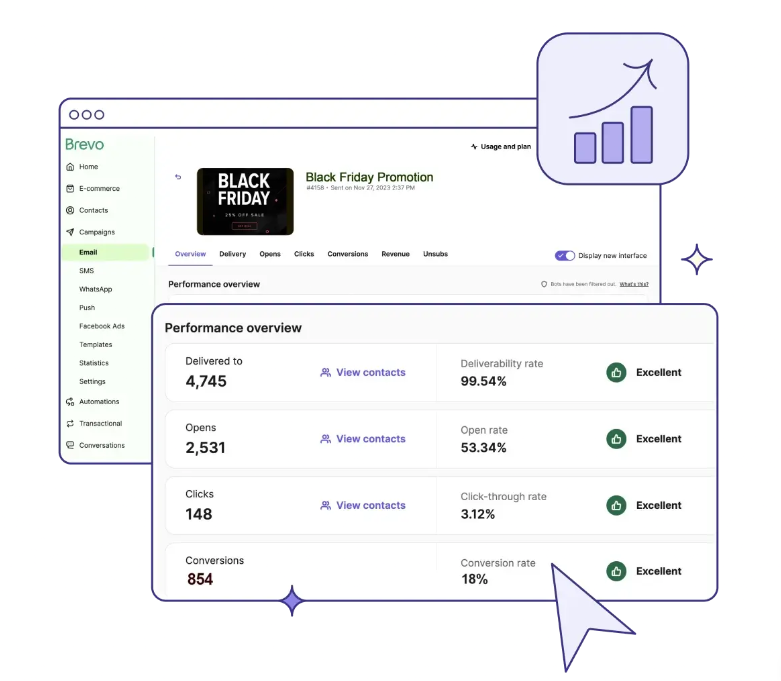
Brevo also bundles email, SMS, and WhatsApp campaigns into the same platform, so you’re not stitching together 3 separate tools (and 3 separate bills) to reach customers across channels. ActiveCampaign supports SMS as an add-on, but WhatsApp isn’t part of its stack, so if you’re already messaging customers there, or want to start, that’s a real reason to look at Brevo beyond the pricing structure alone.
Pros
- Every plan stores your full contact list with no per-tier contact cap — a real differentiator if your list is large, but your send frequency is low
- Native CRM and shared inbox functionality baked into paid plans
- WhatsApp campaigns are available on Professional and Enterprise, useful for teams already messaging customers there
Cons
- Marketing automation is locked behind the Standard plan
- Send-based pricing punishes frequent senders
Pricing
Brevo’s paid plans start at $9/month for 5,000 emails, with Standard from $18/month and Professional tiers for higher volumes.
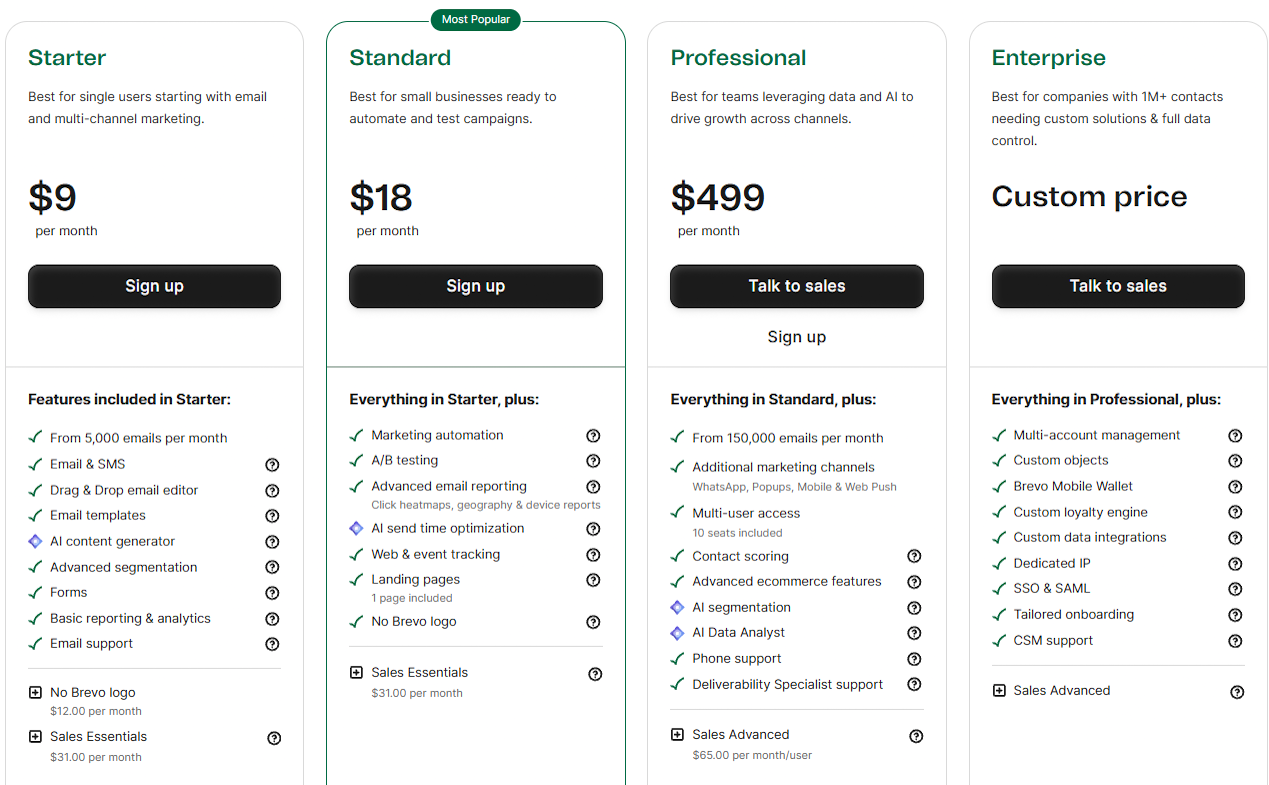
Current as of August 2026 – priced by monthly email volume, not contacts.
Customer reviews
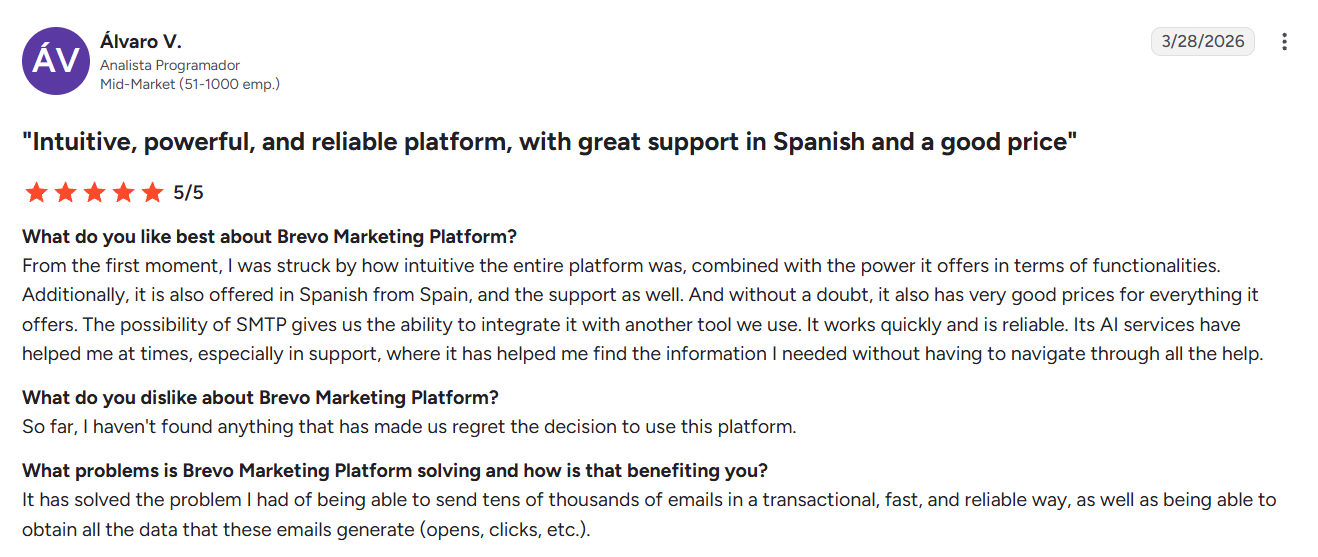
Brevo holds a 4.5/5 rating on G2. Users praise how intuitive the platform feels for non-technical teams and like having CRM, SMS, and WhatsApp bundled into one place instead of juggling separate tools. The most common complaints are the free plan’s 300-email daily cap and a design editor that feels limiting for more custom, heavily branded layouts.
Here’s what Alvaro has to say:
4. Klaviyo: Best for Ecommerce Brands
Klaviyo is the one ActiveCampaign alternative on this list that’s a purpose-built ecommerce marketing platform.
If you’re running a Shopify, BigCommerce, or WooCommerce store, Klaviyo syncs your purchase and browsing data in real time. ActiveCampaign’s ecommerce features touch on this but don’t go nearly as deep on predictive customer lifetime value, churn risk scoring, and dynamic product recommendations pulled live into your emails.
Klaviyo is one of the most widely used email platforms among Shopify stores, thanks to its deep ecommerce integrations.
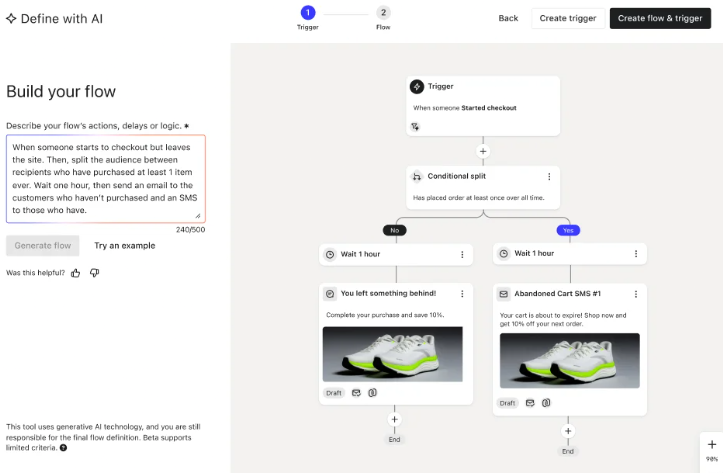
If your revenue depends on abandoned-cart recovery and post-purchase flows doing real work, this tool is designed for that job.
The tradeoff is that Klaviyo bills on active profiles in your account, not on engagement or send volume. That means a large but under-engaged list costs you the same as an actively-opening one.
Pros
- Native, real-time sync with major ecommerce platforms
- Predictive analytics (CLV, churn risk, next-order-date) built into standard reporting
- Dynamic product blocks that pull live inventory and personalized recommendations into campaigns
Cons
- Billed on total active profiles regardless of engagement
- Frequent technical glitches (can be buggy and have slow performance)
Pricing
Klaviyo prices by active profile count, and features stay the same across every tier.
The free plan covers up to 250 profiles and 500 emails per month. The Email plan starts at $20/month for 500 profiles and scales with list size, reaching roughly $150/month at 10,000 profiles and $720/month at 50,000 profiles. The Email + SMS plan costs roughly $15/month more than Email alone at each tier.
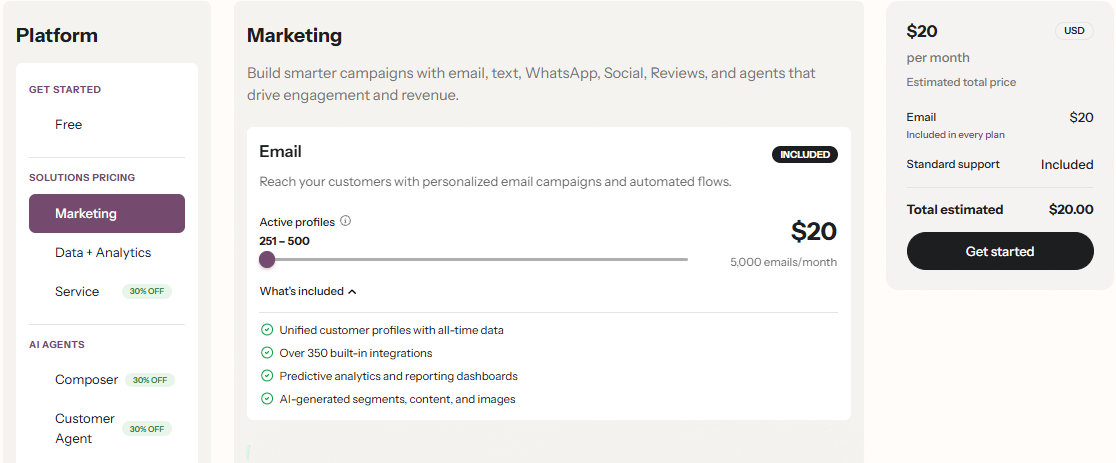
Current as of August 2026 – Visit Klaviyo’s pricing page & use the slider to get accurate pricing & to explore & price add-ons like their AI agent, mobile messaging, & social marketing.
Customer reviews
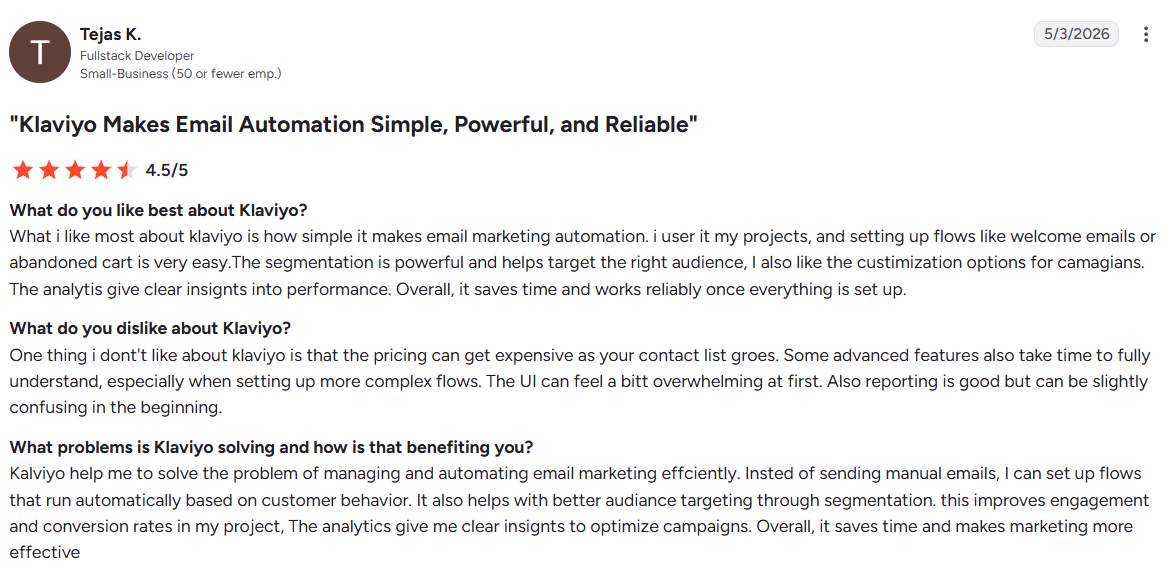
Klaviyo rates 4.6/5 on G2. Reviewers consistently point to its native Shopify integration and predictive segmentation as standout strengths, with several citing clear revenue attribution as a result. The most common complaint is cost — pricing climbs quickly as your active profile count grows, a pain point that intensified after Klaviyo shifted to profile-based billing in 2025.
Here’s what Tejas has to say:
5. Customer.io: Best for Advanced Behavioral Automation
Customer.io offers real-time, event-triggered messaging built for product-led companies. As an ActiveCampaign alternative, it’s the one on this list built specifically around behavioral data rather than time-based sequences.
If your team sends newsletters and promotional campaigns, this might be overkill. But if you’re a SaaS company that needs to trigger a message the moment a user hits (or misses) a specific action inside your product (completed onboarding, abandoned a setup step, upgraded a plan, etc.), ActiveCampaign’s automation builder, while capable, isn’t built around the level of real-time behavioral data the way Customer.io is.
Customer.io connects directly to your product’s event stream, so “user did X” can trigger a message in near real time across email, SMS, push, and in-app, all from one workflow builder.
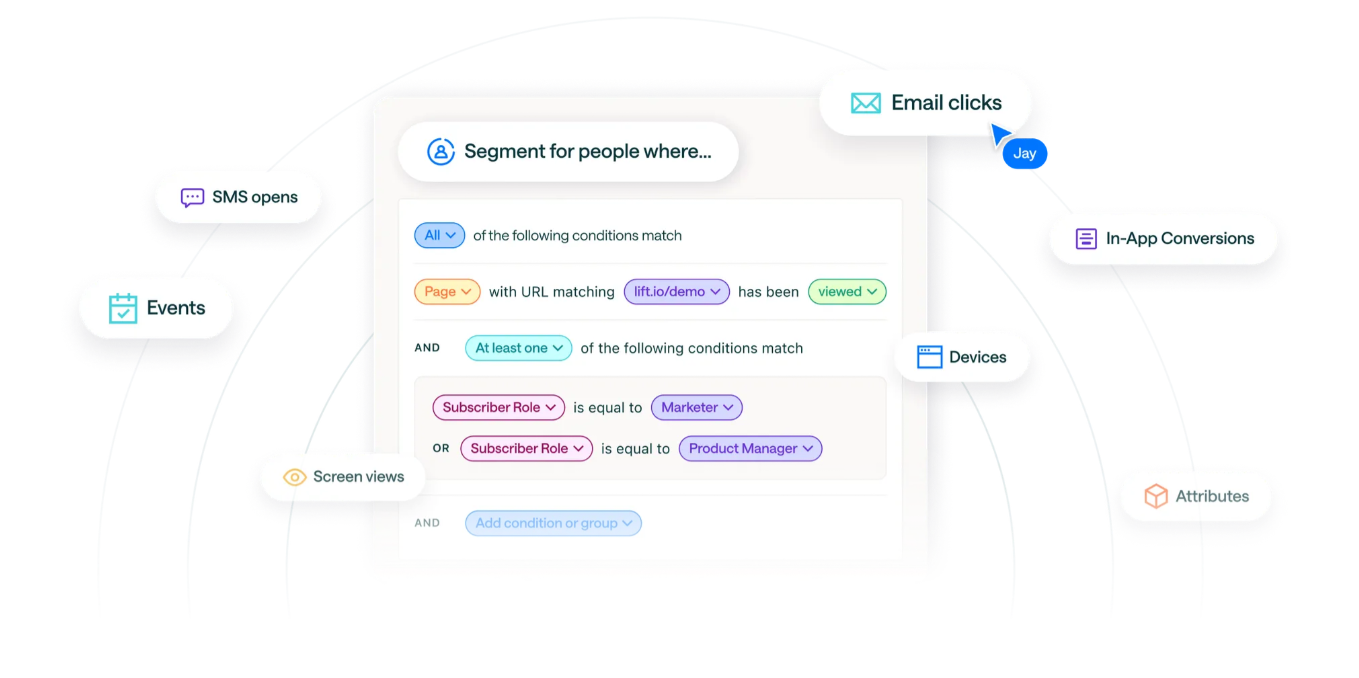
If your automations are mostly time-based (“3 days after signup, send this”), you don’t need this tool. If they’re behavior-based (“the moment they do this specific thing”), it’s worth the higher price tag.
Smart thermostat brand Mysa segmented a Black Friday promotion by location and past rebate usage, rather than sending a single generic version to everyone, resulting in a 3x higher conversion rate due to Customer.io’s behavioral targeting.
Pros
- Real-time, event-triggered messaging, in addition to scheduled automation
- Omnichannel marketing (email, SMS, push notifications, and in-app messaging)
- API-first architecture that integrates well with a tech team’s existing data stack
Cons
- Pricing is steep for teams that don’t need event-level automation
- No native multi-brand or sub-account management
Pricing
Customer.io’s Essentials plan starts at $100/month for 5,000 profiles, then $0.009 per additional profile (about $145 at 10,000 and $505 at 50,000). Premium starts at $1,000/month, billed annually.
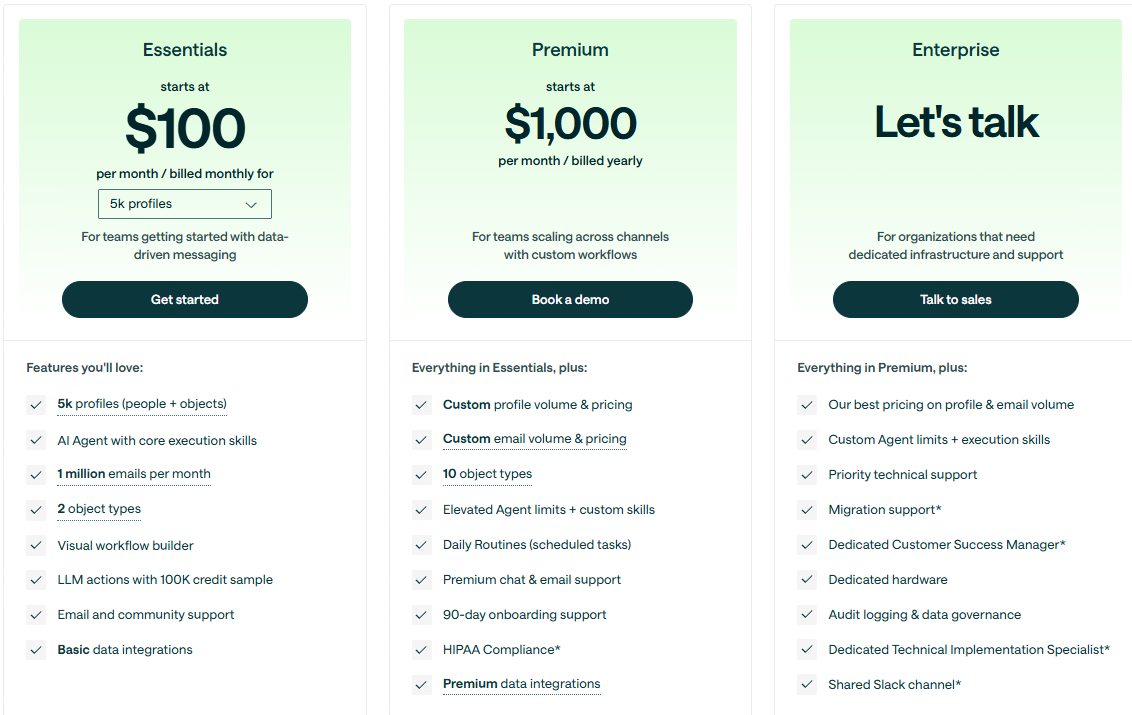
Current as of August 2026. Customer.io prices by profile count rather than contacts.
Customer reviews
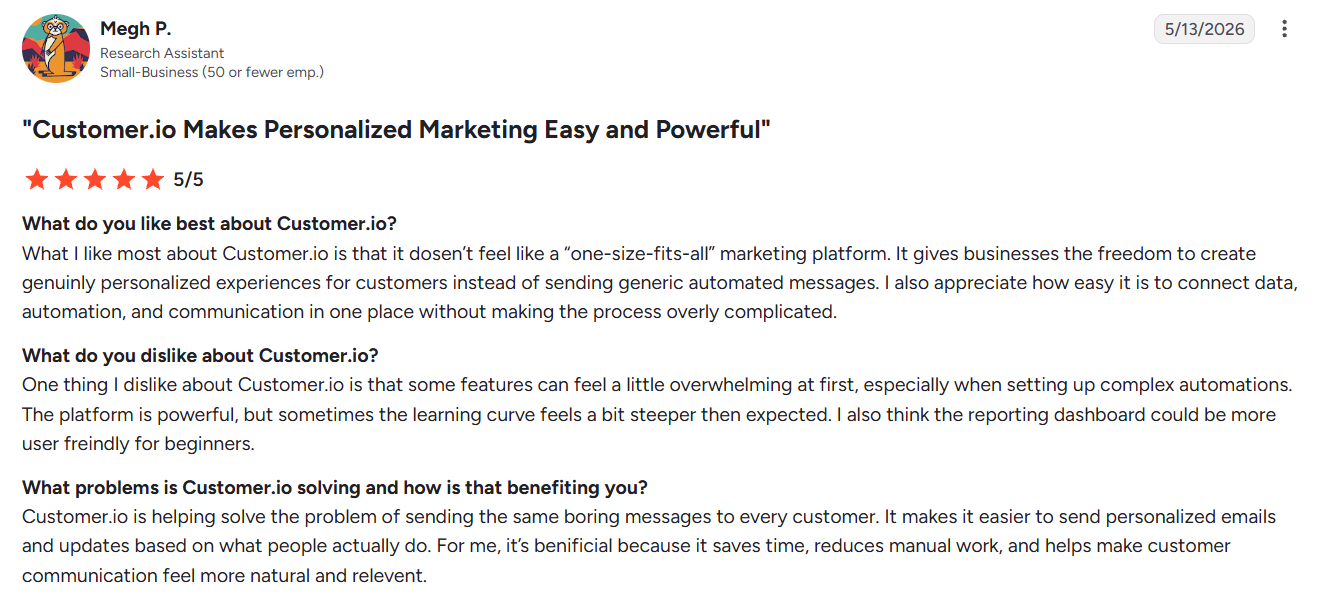
Customer.io sits at 4.4/5 on G2. Users consistently praise its real-time, event-driven automation and developer-friendly API and webhook access, which enable technical teams to build precise behavioral workflows without a heavy engineering lift. The recurring complaints are a steep learning curve for non-technical teams and workflows that get visually cluttered and hard to reuse once branching logic gets complex.
Here’s what Megh has to say:
What to Look for Before Switching from ActiveCampaign
Whichever ActiveCampaign alternative you’re leaning toward, 4 things are worth checking against your own workflow before you commit:
- Automation flexibility – Some platforms handle simple, time-based nurture sequences well. Others (Customer.io especially) are built for behavioral, branching logic tied to real-time events. Match the tool to the complexity you need.
- Multi-brand scalability – If your agency manages multiple brands, clients, or locations, look specifically for subaccounts, shared templates, and role-based permissions built into the plan rather than requiring pricey add-ons.
- Pricing structure – Contact-based and send-based pricing produce very different bills. A platform that looks cheaper on a comparison table can cost more once your specific list size and send frequency are factored in — always run your own numbers before deciding.
- Integrations – If your business runs on ecommerce, most platforms on this list, BigMailer included, aren’t built around Shopify or WooCommerce workflows the way Klaviyo is. If abandoned-cart recovery and product-data-driven flows are core to your revenue, Klaviyo is the better fit.
Final Thoughts – Match the Platform to the Business
The best ActiveCampaign alternative for you is the one that serves your email marketing needs. Of course, price is a factor, but the cheapest option on this list may not have the features you need, which is why I created this list based on use cases.
Multi-brand management if you’re an agency, behavioral automation if you’re product-led, simplicity if you’ve been paying for features you don’t touch, or e-commerce depth if your revenue runs through a store.
Whichever direction you go, run your list size and sending habits against the pricing structure before you commit.
If you manage multiple brands, clients, or locations, find out how BigMailer’s multi-brand tools and white-label option can work for your specific setup by booking a demo. Or, reach out via live chat with any questions, we would love to hear from you. Want to explore on your own? Learn about white label email marketing, check out our email marketing guide for agencies, or create an account and explore.
Important: All providers covered in this article are built for permission-based email marketing. Using purchased, scraped, or third-party lists for cold outreach or lead generation is typically against their terms of service and can result in immediate account suspension.
Author: Jacob Statler
